
Daviess County Court Records After Arrest
After a Daviess County jail arrest, the booking record and the court record serve different jobs. The booking record is created at Daviess/DeKalb Regional Jail when the person enters custody. The court record begins when the prosecutor files or declines charges in the court system. That court record is where hearings, docket entries, filed charges, bond orders, judgments, and sentencing events are tracked.
The Daviess County Prosecuting Attorney is Annie Gibson. The county officials page lists the prosecutor with a term running from January 2023 through December 2026, and Missouri DPS lists the prosecuting attorney's office at 102 N. Main in Gallatin. After law enforcement refers an arrest, the prosecutor may file a complaint or information. A grand jury indictment can happen in some cases, but it is not the normal path for every local arrest.
A jail charge and a filed charge can differ. An officer may book a person on an initial offense label, while the prosecutor may file a different charge, add counts, reduce the charge, amend it, or file no charge. The court record is the better source for what is actually pending in court. For custody and booking fields, use Daviess County jail inmate records.
Search Court Records After Arrest
Missouri Case.net is the statewide public portal for court case lookup. Use it to search Daviess County criminal and traffic cases after charges are filed. The portal can be searched by litigant name or case number, then narrowed by county, circuit, date, or case type when those filters are available. If a new arrest has not produced a visible case yet, the filing may not be complete.
- Search the DDCRJ roster first if custody status or booking date is needed.
- Open Missouri Case.net and search by defendant name or exact case number.
- Use Daviess County or 43rd Judicial Circuit filters where the portal offers them.
- Open the criminal or traffic case and review the case header, parties, charges, and docket entries.
- Compare bond, warrant, hearing, and disposition entries with the roster, if the person is still in jail.
- If no case appears, check again later or contact the circuit clerk for older, sealed, or not-yet-indexed records.
| Field Label | Type | Required | Options / Format Notes |
|---|---|---|---|
| Litigant Name | text | Yes for name search | Search the defendant's last and first name, then narrow to Daviess County if needed. |
| Case Number | text | Yes for case-number search | Use the exact number from a roster, ticket, summons, or court notice. |
| Filing Date / Year | date/filter | Optional | Useful when a name is common or there are older cases. |
| Court / County / Circuit | dropdown/filter | Optional but recommended | Choose Daviess County or circuit context to avoid statewide false matches. |
| Case Type | dropdown/filter | Optional | Use criminal or traffic filters where available. |
Daviess County Court Contacts
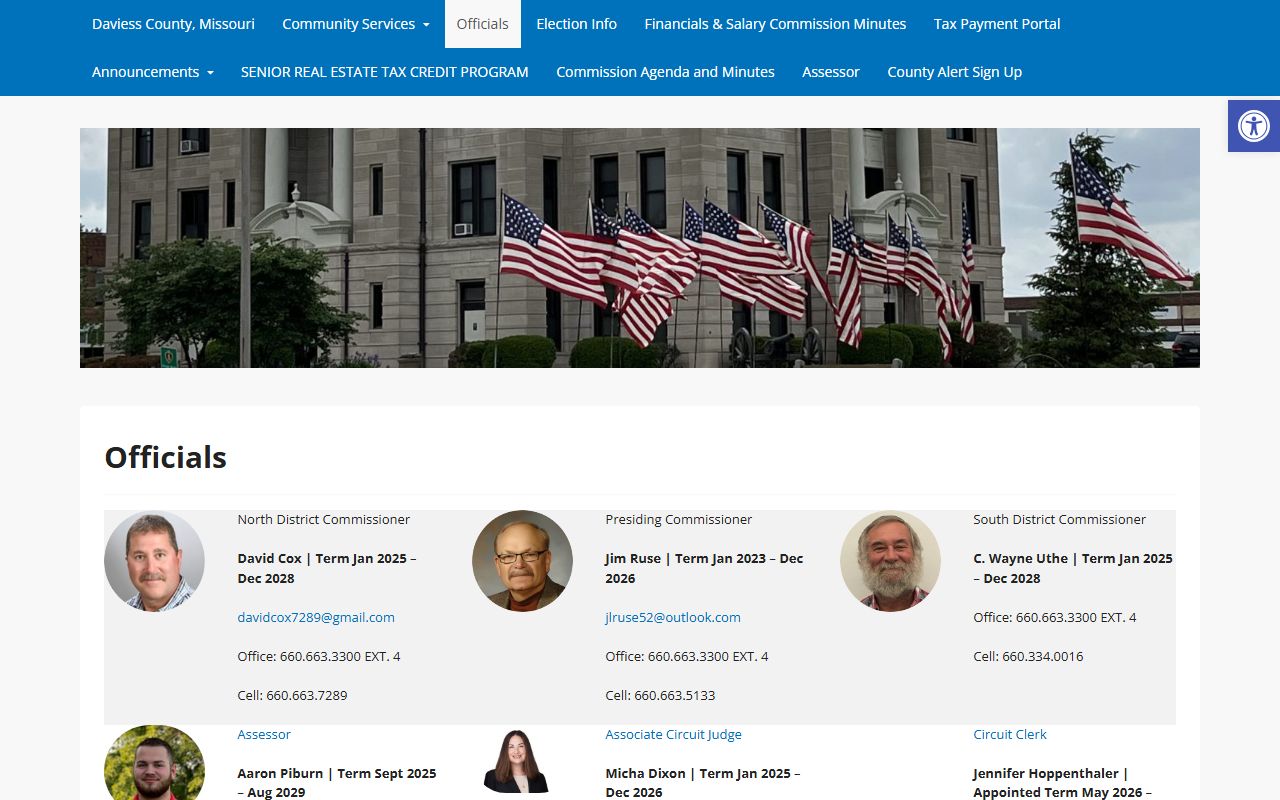
The county officials page is the local source for the elected officials tied to the court-record path, including the prosecutor, circuit clerk, sheriff, and judges.
Daviess County's officials listing identifies the local offices that may hold or route records after a jail arrest.
Use the office that controls the record sought. Courts control court files, the prosecutor controls prosecution records, DDCRJ controls jail custody records, and the sheriff controls sheriff-created incident or warrant records.
Daviess County Charging Records
The charging document is the bridge between a jail arrest and the formal court record. It states the charge that the prosecutor or grand jury brings into court. The terms can be confusing because a jail roster charge may use one label while the later court record uses another. The court record should be read by charge count, statute, level, and current status.
| Document | Who Uses It | What It Does |
|---|---|---|
| Complaint | Prosecutor or law-enforcement supported filing | Starts or supports a criminal case with alleged facts and charges. |
| Information | Prosecuting attorney | Formal prosecutor-filed charge document often used in felony and misdemeanor cases. |
| Indictment | Grand jury | Formal accusation returned by a grand jury in cases where that process is used. |
Daviess County Charge Status
Charge status tells the reader where the accusation stands. Pending means the case is still open. Amended or reduced means the filed charge changed after review, plea talks, or court action. Dismissed means that charge no longer proceeds in that case. A disposition is the court outcome for a charge, such as plea, verdict, dismissal, or sentence.
| Status | What It Means | Why It Matters |
|---|---|---|
| Pending | The charge remains active in court. | Future hearings, bond orders, or plea events may still occur. |
| Amended | The filed charge was changed. | The roster's first arrest label may no longer match the court case. |
| Reduced | The charge level or offense was lowered. | It can affect sentence range, bond, and case outcome. |
| Dismissed | The charge was dropped by court action. | A dismissal is not the same as automatic expungement. |
| Warrant / Failure to Appear | The court may issue a warrant tied to the case. | It can lead to a new arrest and DDCRJ booking. |
Bond After Daviess County Arrest
No DDCRJ online bond-payment page was located in the official research. The practical path is to check the roster profile for bond amount and bond type if shown, call DDCRJ to confirm whether the person can be released from that facility, and check Case.net for court bond orders. The Daviess County court or circuit clerk may be needed for court-filed bond conditions.
| Bond Term | Plain Meaning | Local Caution |
|---|---|---|
| Cash bond | Money posted with the proper office. | Confirm the receiving office before paying. |
| Surety bond | A Missouri licensed bail bond agent posts the bond. | Allowed only if the court permits surety. |
| Recognizance / PR | Release on a promise to appear. | Conditions can still apply. |
| No-bond hold | No ordinary release until a court changes the order. | A local payment will not clear a no-bond order. |
| Detainer or hold | Another agency has a custody claim. | Release can be blocked even after local bond is posted. |
Daviess County Arrest Warrants
The Daviess County Sheriff's Office has a Most Wanted page, but the research did not find an active public warrant table or searchable local warrant portal. Warrant information may appear indirectly in the DDCRJ roster because the app supports warrant numbers, court and case numbers, hold fields, and charge status. Case.net can also show court warrants and failure-to-appear events in docket entries when public.
For local warrant questions, call the sheriff's office at 660-663-2031. For a bench warrant tied to a court case, search Case.net and contact the court or circuit clerk. Municipal bench warrants may be handled by a city court if the arrest arose from an ordinance or traffic matter. A person who believes a warrant exists should contact the court, sheriff, or an attorney before appearing in person.
Note: A warrant arrest may create a new jail booking, but the court record explains why the warrant issued and what hearing comes next.
Charges vs Convictions
Court records after a jail arrest must be read with the case stage in mind. A charge is an accusation filed in court. A conviction is an outcome after a guilty plea, verdict, or other qualifying court event. Public records may show both, but they do not mean the same thing.
| Point | Charge | Conviction |
|---|---|---|
| Stage | Before final outcome | After plea or finding |
| Meaning | Accusation | Case result on that count |
| Can change? | Yes, it can be amended, reduced, or dismissed | Changes usually require later court action |
| Where seen | Charging document and docket | Judgment, plea, sentence, or disposition entry |
Sealed and Expunged Records
Missouri public access law affects which court records after an arrest are visible. RSMo 610.100 governs arrest and incident records and explains when law-enforcement records can be open or closed. RSMo 610.140 governs expungement of certain criminal records. Juvenile records have added protections, including special handling for fingerprints and photographs under RSMo 211.151.
| Point | Sealed or Closed | Expunged |
|---|---|---|
| Public visibility | Public access is restricted by statute or court order. | Eligible records are closed under the expungement order's terms. |
| Who may still see it | Courts or agencies may retain limited access where law allows. | Access depends on Missouri expungement law and exceptions. |
| How it happens | By law, case type, court order, or record status. | By petition and court order when eligible. |
| Effect on third parties | Does not guarantee every copied record disappears. | Official access changes, but outside copies may need separate handling. |
Important: Dismissal, sealing, and expungement are different outcomes. Check the court docket and the Missouri statute before assuming a record is gone.
Daviess County Record Requests
Missouri Sunshine Law does not require one special request form. The better practice is to make a written request to the custodian that holds the record. DDCRJ is the likely starting point for booking and custody records. The sheriff's office is the likely custodian for sheriff incident reports, arrest reports, most-wanted information, and sheriff warrant records. Missouri courts control court files.
The sheriff's fee page lists report copies at $5 for up to 10 pages, $10 for 11 to 20 pages, and $5 more for each added 10 pages. DVDs are listed at $5, and fingerprints at $10. Those fees are sheriff-office fees, not a promise that every court or jail record costs the same amount. For booking photos, the Daviess County jail mugshots page explains the public-record path and links the booking-photo issue to Daviess County jail mugshots.